
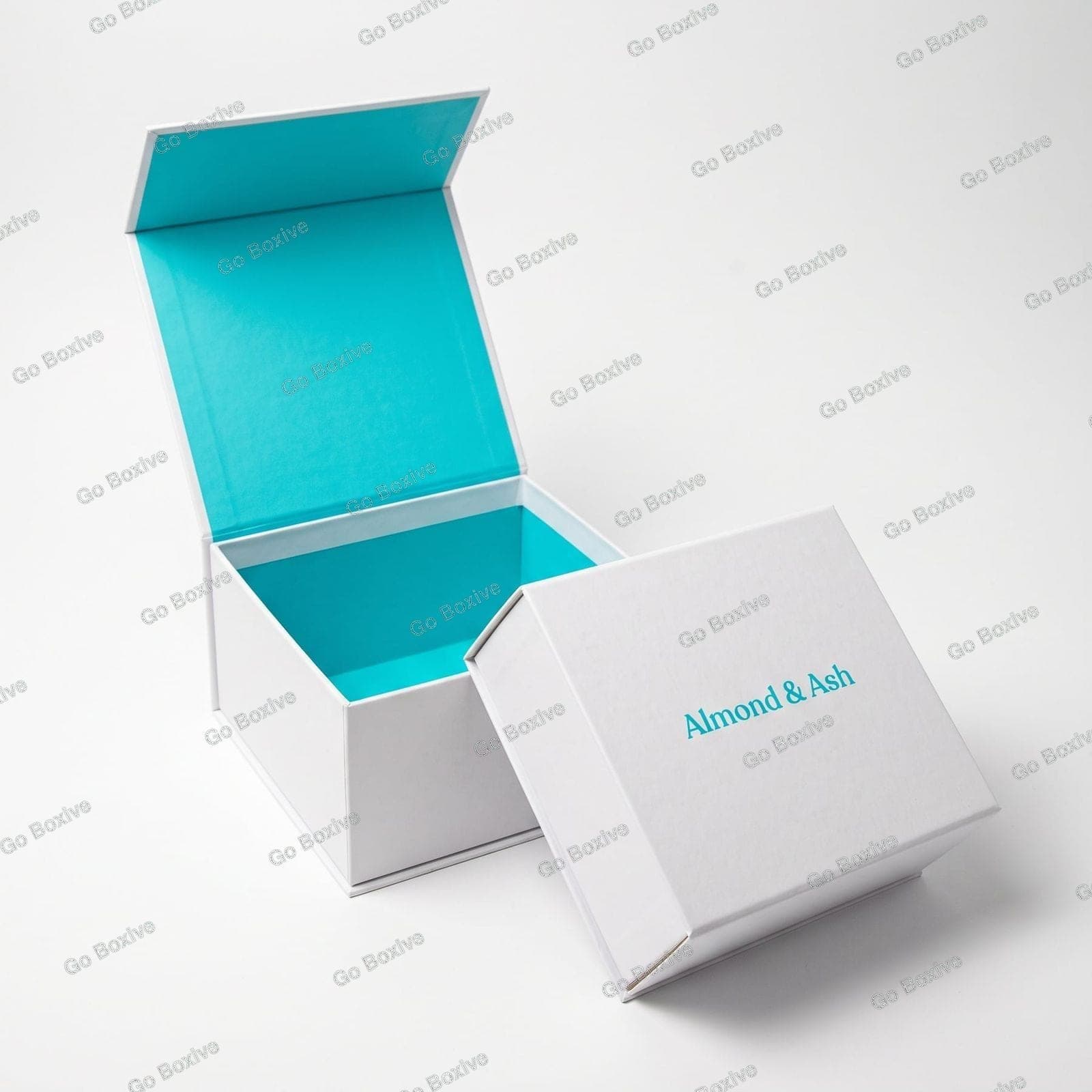
For a product launch, the box construction decision often gets skipped in favor of just picking whatever looks nice in a reference photo. Worth slowing down on — rigid and folding carton aren't two styles of the same thing, they're two different manufacturing processes, and the difference shows up directly in cost, timeline, and how the box actually behaves once it's holding your product.
A folding carton is one piece of paperboard, printed flat before it's cut, folded, and glued or tucked into shape. That single-piece, print-then-erect process is why folding cartons are efficient to produce at real volume and ship flat until they're needed. It's also the construction behind most of what's actually on a retail shelf — Cardboard Boxes, tuck-end, reverse-tuck, gable, pillow, and the rest of the folding style range are all variations on this same underlying process.
A rigid box is built from two separately-constructed pieces — a lid and a base — each wrapped in its own print layer over a stiffer substrate, then finished as a matched pair. Because it's assembled from two built components instead of folded from one flat sheet, it holds its shape under real weight in a way a folding carton can't match, and it has genuine heft in the hand the moment it's picked up. That's exactly why rigid shows up so consistently for jewelry, watches, premium spirits, and tech unboxing.
The honest tradeoff in a rigid box vs. folding carton cost comparison is speed, not quality. Rigid construction takes more labor and material per unit — two components, each individually wrapped — so it costs more per unit than a folding carton of similar size. Folding cartons print and erect in one continuous process, which keeps them faster and more economical at any volume, including a small first launch run.
For a launch specifically, the decision comes down to what the box is actually doing for the product. If the item is genuinely premium-positioned and the unboxing moment is part of what you're selling — fine jewelry, a flagship tech accessory, a spirits brand's hero SKU — rigid earns its cost back. If the priority is getting to market fast, testing a new SKU without a large packaging commitment, or the product itself is what's carrying the premium feel, a folding carton with the right finish — foil, soft-touch lamination, spot UV — can look genuinely excellent without the added cost or lead time.
There's no minimum order here, so either path is testable at real launch volume — 100 units, not a warehouse-scale bet either way. Describing the actual product on the quote form gets it matched to a construction based on what it actually needs, not guessed from a reference photo — that's how GoBoxive prices every rigid vs. folding carton decision, case by case.


