
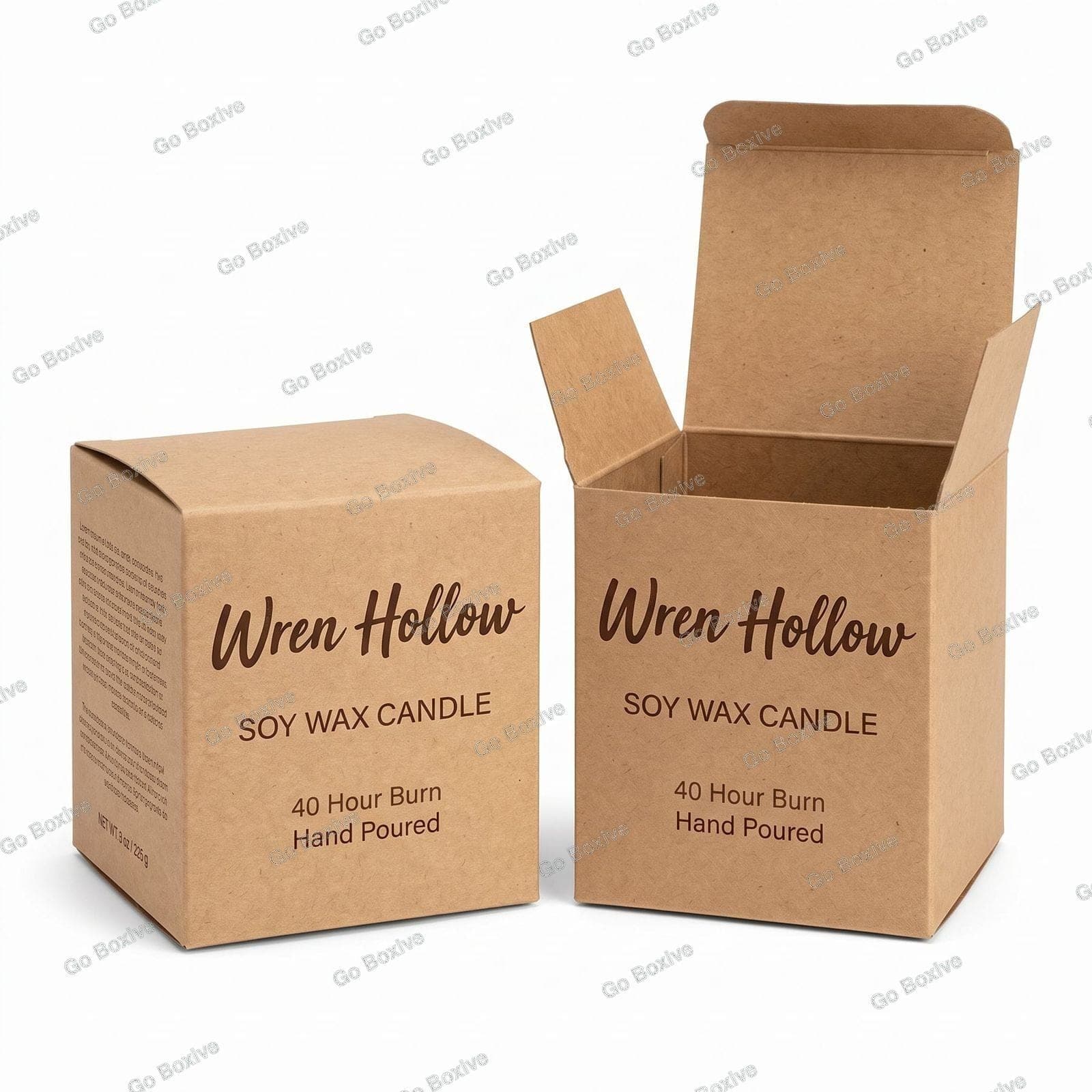
For a small brand working with a tight budget, "should I go custom or just buy stock boxes" isn't a design question, it's a math question — the real custom packaging vs. stock boxes comparison small brands actually need — and it's worth actually doing the math instead of assuming custom is out of reach.
Stock boxes have a real, honest case for existing: they're available today, not in a week and a half, they require zero design decisions, and at very low volume — a handful of units, a one-off gift, testing whether a product idea even works — they're the cheaper option in raw dollars. If the box is genuinely disposable to the experience — an internal shipment, a B2B pallet nobody outside a warehouse will ever open — spending time and money customizing it usually isn't worth it. That's not a knock on stock packaging; it's just not solving a brand problem, because there isn't one to solve.
Where custom earns its cost back is anywhere a customer actually sees or touches the box. Unboxing has become genuine marketing — a well-designed box like a custom gift box or branded mailer gets photographed and shared for free in a way a plain brown carton never will. Custom also means the box is built to your product's real dimensions instead of a generic size with void fill stuffed around it, which often means less material and a tighter, cheaper shipment than it looks like on paper. And a box that already says what's inside and whose brand it's from does something a sticker slapped on a stock box can't: it looks intentional before the customer has opened anything.
Historically, the actual barrier wasn't whether custom packaging worked better — it clearly does for anything customer-facing — it was minimum order quantities. Most custom printers won't quote below 1,000 to 5,000 units, which meant a small brand had two bad options: sink cash into packaging inventory it didn't need yet, or stay on stock boxes far longer than it wanted to, waiting to be "big enough" to justify the switch.
That's the specific piece of the old math that doesn't hold up anymore. There's no minimum order here — 100 units is a real, quotable order, not an exception — and design support is free with unlimited revisions, so there's no separate design fee to spread across thousands of units to make it worthwhile. The volume threshold where custom used to "start making sense" mostly existed because of how other printers priced their setup costs, not because small orders are inherently uneconomical to produce.
A reasonably honest way to decide: if the box reaches a customer's hands or sits on a shelf, custom is very likely worth it even at 100–500 units, because the brand value it adds shows up on the very first order, not the thousandth. If it's purely functional shipping that no customer will ever see, stock remains a perfectly reasonable choice. If you're somewhere in between, browse the full GoBoxive catalog or start a quote — worth comparing the real numbers before deciding on gut feel.


